
Owning and non-owning C++ Ranges -- Hannes Hauswedell
This is the first article in a series discussing some of the underlying properties of C++ ranges and in particular range adaptors. At the same time, I introduce the design of an experimental library which aims to solve some of the problems discussed here.
Owning and non-owning C++ Ranges
by Hannes Hauswedell
From the article:
We will begin by having a look at ranges from the standard library prior to C++20, since this is what people are most used to. Note that although the ranges themselves are from C++17, I will use some terminology/concepts/algorithms introduced later to explain how they relate to each other. Remember that to count as a range in C++, a type needs to have just
begin()andend(). Everything else is bonus.[…]
Containers are the ranges everybody already used before Ranges were a thing. They own their elements, i.e. the storage of the elements is managed by the container and the elements disappear when the container does. Containers are multi-pass ranges, i.e. you can iterate over them multiple times and will always observe the same elements.
[…]
If containers are owning ranges, what are non-owning ranges? C++17 introduced a first example:
std::string_view, a range that consists just of abeginandendpointer into another range’s elements.[…]
However, the most important (and controversial) change came by way of P2415, which allowed views to become owning ranges. It was also applied to C++20 as a defect report, although it was quite a significant design change. This is a useful feature, however, it resulted in the
std::ranges::viewconcept being changed to where it no longer means “non-owning range”.[…]
 Using ranges or algorithms has several advantages over raw loops, notably readability. On the other hand, as we’ve just seen, sheer performance is not necessarily among those advantages. Using ranges can be slightly slower than a raw loop version. But that’s not necessarily a problem, it really depends on your use case. Most probably it won’t make a bit difference.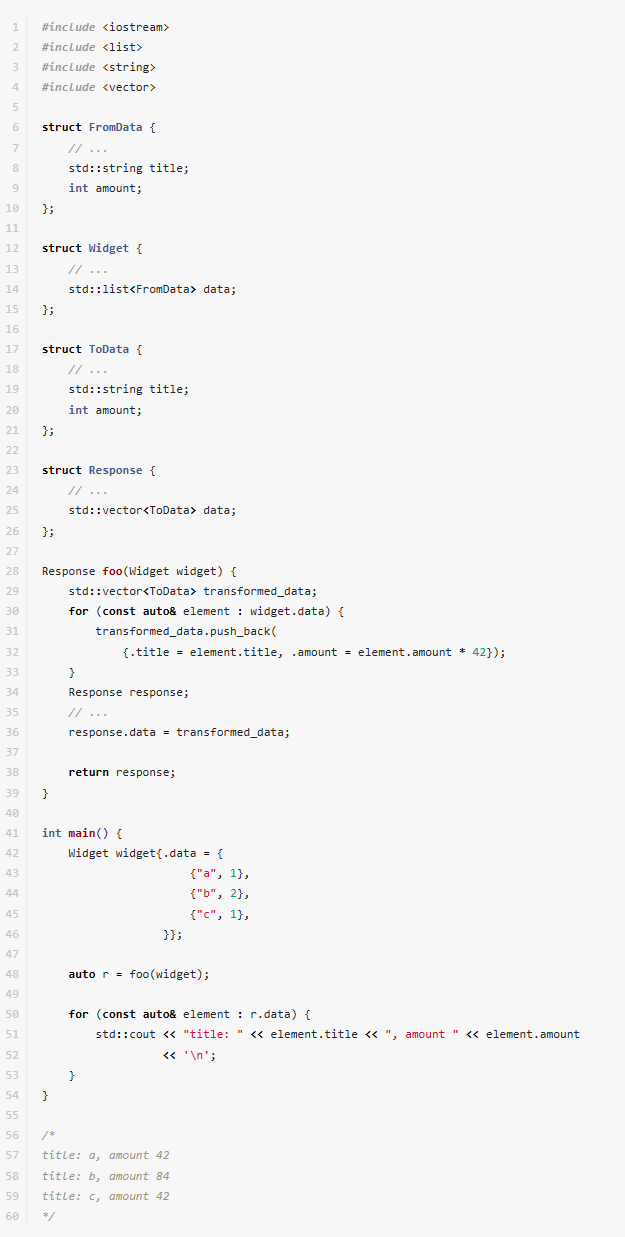
 Registration is now open for CppCon 2025! The conference starts on September 13 and will be held
  Constexpr has been around for a while now, but many don’t fully understand its subtleties. Andreas Fertig explores its use and when a constexpr expression might not be evaluated at compile time.
 C++’s undefined behaviour impacts safety. Sandor Dargo explains how and why uninitialised reads will become erroneous behaviour in C++26, rather than being undefined behaviour.
 In the December issue of Overload [